
How to turn Valentine’s traffic into year-round gold

For most stores, Valentine’s Day is the one Hallmark holiday where customers rarely spend more than $200. Yet, it’s also the single biggest opportunity to bring in new buyers. The challenge? Turning that influx of modest purchases into lasting, high-value relationships.
Timing is everything
Waiting until January to finalize your Valentine’s assortment is too late. It may be a lower-ticket holiday, but it’s still a high-volume moment, and volume requires planning.
Sourcing should start much earlier during June trade shows, when you can see fresh products, compare suppliers, and find the right mix of pieces under $200. From there, continue requesting proposals and refining selections throughout the summer. By September, your collection should be finalized so you can photograph items, prepare marketing campaigns, and brief your team before the holiday rush.
Once the season arrives, establish a process where your team submits reorders by 2 p.m. so suppliers with bin-stock programs can ship items to arrive the next day. Running out of even a single popular item can mean a lost sale, and potentially a lost long-term customer. Every missed opportunity in February is a missed engagement ring client six months down the road.
Build long-term supplier relationships
Don’t overlook supplier relationships. Finding the right suppliers ensures a diverse, appealing collection and provides flexibility for add-on sales. By negotiating in advance, you can secure suites of complementary items and ensure stock levels are adequate for the Valentine’s rush. Planning early also gives you first pick of inventory and stronger pricing.
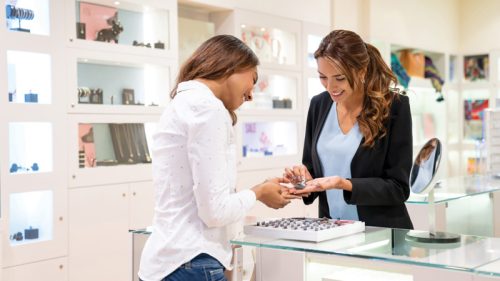
Photo © Andresr/Getty Images Signature
Make it easy for the customer
If customers have to search through multiple displays to find small, affordable items, frustration can kill impulse purchases (and potential repeat visits). A simple but effective tactic is to group all inventory under $200 into a single case or section of the store. Promote them in your marketing materials and website and offer free shipping to remove friction from the buying process.
Partnerships with local restaurants or experiences can also enhance the appeal. For instance, offering a free dinner for two with a purchase above a certain amount adds perceived value without cutting into margins. This encourages customers to spend a little more while making the shopping experience memorable.
Curbside pickup is another tool that provides convenience for last-minute buyers and reinforces a positive first impression. When a purchase is easy and seamless, customers are more likely to return for future, higher-ticket items.

Capturing customer insights
A successful long-term sales strategy starts with data. Valentine’s Day generates a volume of new customers that few other times of year can match, but many retailers miss the mark by pushing promotions for $500 or $1,000 items. These high-ticket incentives rarely work during this holiday because most shoppers simply aren’t looking to spend that much. The smarter approach? Focus on the majority who are buying under $200.
Every Valentine’s transaction is an invitation to a much bigger conversation. While your customer is making their purchase, take the time to learn about them, their preferences, upcoming occasions, and what drew them to your store. By capturing these insights and tracking who buys between February 1 and 14, you can create a list of new customers to target with follow-up marketing. This could be a personalized email, a catalogue highlighting complementary pieces, or an invitation to a private event showcasing engagement rings.
Your follow-up starts during the initial visit
Start the follow-up process during the initial visit. As customers complete their transaction, offer them a clear incentive to come back: a small discount on their next purchase, a VIP appointment for viewing engagement rings, or early access to new collections. These gestures set the expectation that their relationship with your store continues beyond their initial purchase.
Personalization is what turns a one-time shopper into a loyal client. Record details such as what they were shopping for, upcoming occasions they mentioned, or their preferred styles. When your follow-up reflects those details, customers feel seen and valued rather than treated like another transaction. That recognition is what brings them back.
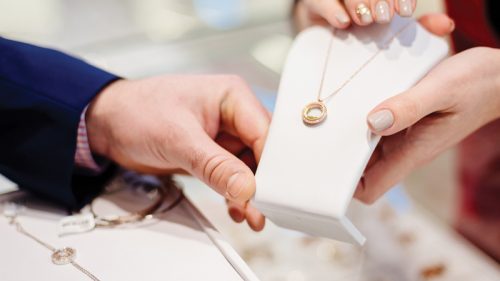
Train your team on smart clienteling
A Valentine’s Day sale is one of the best chances your team will have to build meaningful relationships with new customers. A customer picking up a $200 necklace for a daughter right now might also be the same person who returns months later for a $20,000 tennis bracelet or an engagement ring.
But that only happens if the first interaction feels helpful, warm and memorable.
That’s where smart clienteling comes in. Train associates to ask gentle, open-ended questions while the customer is browsing or completing their transaction:
○ Who is the gift for?
○ Do they prefer white, yellow, or rose gold?
○ Let me show you the matching earrings or bracelet that go with this piece.
○ What is the next occasion you’ll be celebrating this year?
These questions allow associates to understand the customer’s intent and personal style. When associates know more, they can make relevant suggestions that feel natural rather than pushy.
Stocking suites of complementary items (pendants with matching earrings, studs with matching bracelets, small stacks that build into full sets) makes add-on selling effortless. Instead of a hard upsell, it becomes a simple, helpful offer: “Would you like to see the piece that was designed to go with this?”
Top retailers often use the mantra, “Don’t stop until the customer tells you to stop.” It isn’t about being aggressive; it’s about being thorough. It means presenting options confidently, reading the customer’s cues, and stopping the moment they indicate they’re done. When done well, it turns a small sale into an opportunity for future milestone purchases.
Leverage technology
Modern CRM and POS tools make clienteling quick and scalable, but only if your data is accurate. Before Valentine’s traffic ramps up, ensure every associate understands how to:
○ Look up customer history
○ Record preferences and notes
○ Use segmentation tags
○ Track purchases
Well-trained associates can capture the right details during each interaction, which directly improves follow-up marketing.
Clean up product categories, price points, inventory levels, and item attributes in your system so your CRM can segment effectively. Proper tagging makes it easier to trigger personalized recommendations, reminders, and VIP offers based on what customers actually browse or buy.
The insights your team gathers turn into actionable follow-up that drives repeat sales.
Your ability to convert Valentine’s traffic into long-term growth depends on what happens after the sale. Think beyond the holiday: every purchase is an opportunity to cultivate a lifetime of trust and repeat business.
Are you ready to turn your February customers into a pipeline of high-value, loyal clients?
Megan Crabtree is the founder & CEO of Crabtree Consulting, a boutique consulting firm with a proven track record of successfully growing jewellery retailers and manufacturers for more than two decades. Known for their unique data-driven approach, they identify barriers and create tailored growth opportunities, fuelling success and helping clients reach their goals in the industry.
Sign up for our newsletter
Get all the latest news and features from Jewellery Business. Submit your email below to get our twice-monthly newsletter.
Products


Read the Latest Issue
