
Why antique diamond cuts matter today
A journey through the cuts that defined diamond craftsmanship
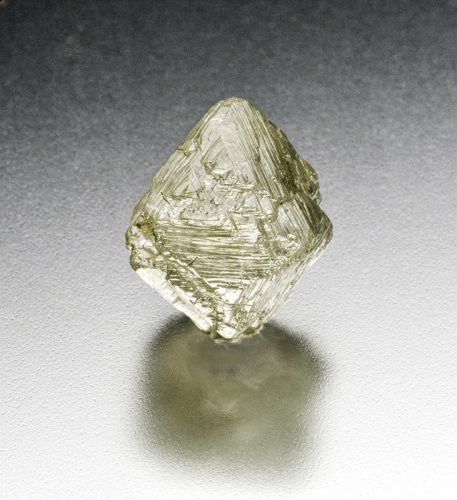
Photo by Jason Stephenson
From the 1980s through the early 2000s, the modern round brilliant with perfect symmetry and ideal proportions was the preferred diamond cut. Antique diamonds were often recut to increase their brilliance and sparkle. Today, antique cuts are in high demand. Buyers appreciate their rarity and character; designers want to offer their clients unique jewellery; and vintage jewellery lovers view recutting as destroying something historically significant.
This article describes and discusses the best-known antique cuts: the point cut, table cut, rose cut, old mine cut, and old European cut.
Point cut
The point cut appeared in the 1300s. It was a basic modification of the octahedron shape (Figure 1). The surfaces were smoothed by rubbing the diamonds on boards coated with diamond grit and olive oil. The process involved only grinding and polishing, not cutting. Point cuts have sharper edges and different angles than natural octahedrons. Natural octahedrons are not considered point cuts.
Table cut and portrait cut
In the 1400s, European cutters started to cut away the top point of diamond octahedrons, creating a style called the table cut because of its flat-top table facet. Frequently, cutters also removed the lower point of the stone to form a smaller square facet called a culet. This gave the stone a total of 10 facets—five on the crown (top) and five on the pavilion (bottom). The table cut improved the amount of light returned to the viewer, making the diamond brighter than point-cut gems. As a result, point-cut diamonds were gradually reshaped into table cuts.
A variation of the table cut is the portrait cut. Like other old cuts, portrait cuts can be found in both antique and contemporary jewellery. They are extremely thin diamonds that originally had a single row of facets around the edge of a very large table, which resembled a thin sheet of glass. It was historically used to visually enhance and protect miniature paintings, acting as a window to the image set below the diamond.
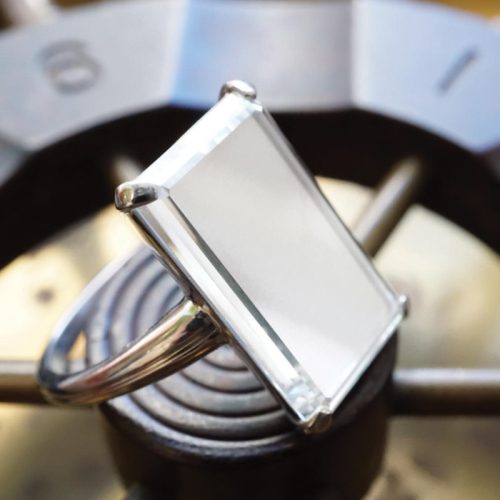
Photo courtesy Anup Jogani
Modern designers are using portrait-cut diamonds that have more than a single row of step-cut facets and no underlying photo or painting (Figure 2). The lack of sparkle of this cut attracts those looking for understated elegance in their jewellery. Besides being the perfect way to present extraordinary diamond clarity, the portrait cut looks both ancient and modern at the same time.
Rose cut
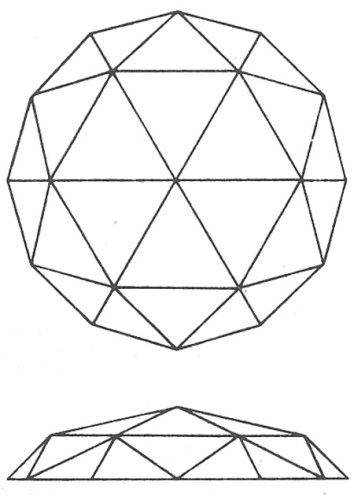
Rose-cut diamonds are dome-shaped with flat bottoms, and they have rose-petal-like triangular facets that usually radiate out from the centre in multiples of six (Figure 3). From above, the rose cut may appear round, oval, or pear shape. The shape of the original diamond crystal largely determines the shape into which it will be cut. Rose-cut diamonds have more sparkle than table-cut diamonds, but not as much as brilliant cuts.
In the 1400s, rose-like cuts were in wide use and gradually evolved into the classical rose cut by the 1500s. Most were flat bottomed, and the crown had any number of triangular facets. Over time, the name “rose cut” was derived from the fact that the cut diamond is supposed to resemble the opening of a rose bud.
In recent years, rose cuts have become very popular (Figure 4). In fact, most rose cuts on the market are new. The demand for rose cuts started with designers, who use it for reproductions. The newer rose cuts tend to be more symmetrical, while the shape and facets of most old rose-cut diamonds are normally irregular because they were cut by hand.
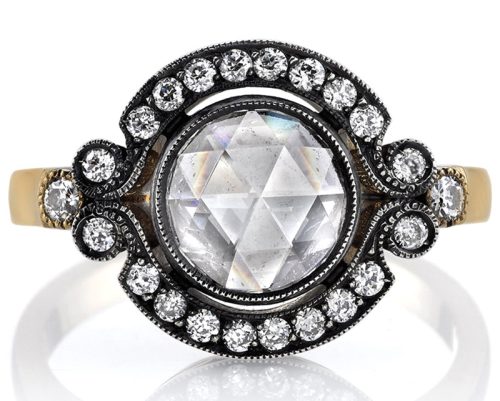
Photo courtesy Single Stone
Old mine cut (Brilliant cut or antique cushion cut)
The old mine cut has a cushion shape—a rectangular or squarish shape with curved sides and rounded corners with 58 facets (Figure 5). It is similar to the modern brilliant cut but with a smaller table, a larger culet, a higher crown, and a greater total depth (Figures 6 & 7). The girdle is often irregular and very thin in places, and the lower half facets on the pavilion are shorter, which creates a broader pattern of bright and dark areas and the appearance of more fire than that of a modern round brilliant-cut diamond.
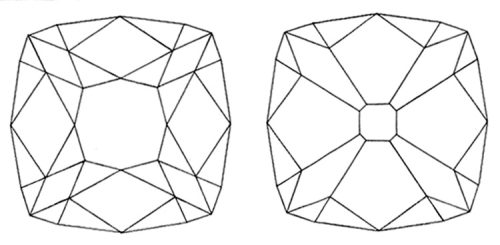
The term “old mine cut” originated from the fact that most diamonds with this cut were mined in India or Brazil instead of in the newer mines of South Africa, which were established starting in the 1870s. From the early 1700s to the late 1800s, the old mine cut was a common hand-crafted diamond cut, characterizing jewellery of the Georgian era (1714–1837) and the Victorian era (1837–1901).
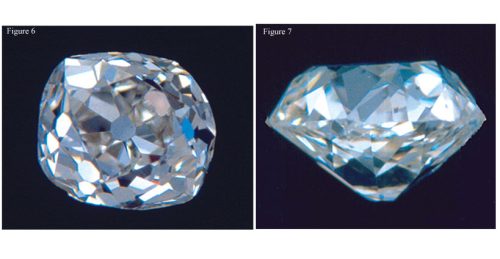
Photos © Renée Newman
Old European cut
Old brilliant cuts with round outlines appeared around 1880 and are called old European cuts (Figures 8 & 9). They are not as bulky as the old mine cut, but they usually have a high crown, a large culet and short lower half facets. The old European cut is the direct ancestor of the modern round brilliant cut and is the most common diamond cut seen in antique jewellery.
Even though both old European and modern round brilliant cuts are round and typically have 58 facets, they have different patterns of bright and dark areas when viewed face up. The old European cut has been described as having a chunky pattern of light that enhances diamond fire in spot lighting with broader flashes of colour, whereas modern round brilliants have a splintery pattern that makes them brighter and more sparkly because their pavilion facets are narrower.
According to GIA.edu, the GIA identifies round diamonds as classic old European cuts using four criteria:
- Table size: less than or equal to 53 per cent
- Crown angle: greater or equal to 40 degrees
- Lower half facet length: less than or equal to 60 per cent
- Culet size: slightly large or larger
If a diamond meets three out of the four criteria, it will still receive an “old European cut” designation on a GIA grading report. A report for older cuts of diamond simply provides the gem’s measurements and grades for colour and clarity, as the GIA only issues cut grades for modern round brilliants.
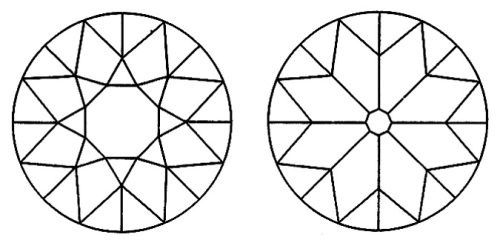
Old European cuts are found in jewellery from the late Victorian, Edwardian and Art Deco eras. Designers today are also setting them in modern and vintage-style jewellery. True old European cuts with high colour grades are extremely rare, as most high colour-graded older cut diamonds have been recut to modern shapes.
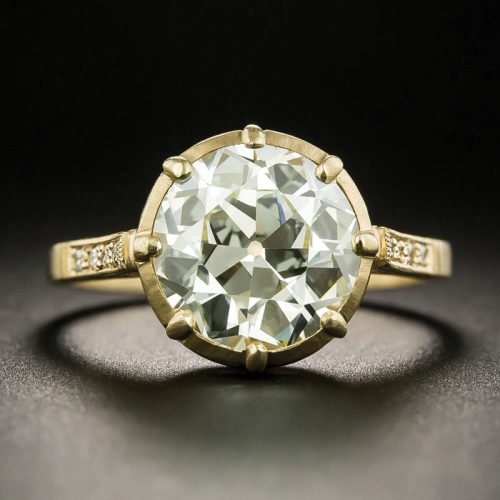
Photo by Cole Bybee.
Is Taylor Swift’s engagement diamond an old mine cut?
Taylor Swift’s engagement diamond made the headlines in many news outlets worldwide.
People magazine announced: “Taylor Swift Brings Back the Forgotten Old Mine Cut Diamond.”
Town & Country declared: “Old Mine Cut Diamonds Are Making a Comeback. Thanks to Taylor Swift, the antique style is suddenly back in fashion.”
Swift’s engagement diamond has a cushion shape like old mine cut diamonds, but the elongated diamond does not look like a typical, squarish old mine cut in the photographs of her ring. Nevertheless, the definition and concept of an old mine cut or old European cut can vary from one person and gem lab to another. That is why GIA has specified the measurement limits for diamonds identified as old European cuts on their lab reports. Due to the scarcity of old mine cuts, it’s not practical to give detailed measurement ranges for them. Sometimes they are simply called antique cushion cuts.
Diamonds that are identified as “old mine cuts” do not have to be antique stones that are at least 100 years old. Due to high demand for vintage-style jewellery, new diamond rough is now being cut into antique cutting styles.
Why have antique diamond cuts become popular
The publicity surrounding Taylor Swift’s engagement ring is only one of the factors that has contributed to the increasing popularity of old diamond cuts. The conversation about conflict diamonds (2000s–2010s) made old stones more appealing than newly mined ones. Concerns about the environment increased, and recycling antique diamonds was viewed as a way to reduce their environmental impact. Consumers began to seek out what felt rare and visually distinct. Modern brilliants, by comparison, all looked the same.
Twenty years ago, the trade prioritized perfection, symmetry, and standardized brilliance—so antique diamonds were recut to turn them into modern brilliants that sold more easily.
Today, the market also values rarity, ethical sourcing, uniqueness, and historic character. As a result, adding old-cut diamond styles to a store’s diamond inventory has become a way to gain new customers and more sales.
Renée Newman, BA, MA, GG, is a gemmologist, lecturer, and author of 16 gem and jewellery books. Her newest diamond book, Diamonds: Their History, Sources, Qualities and Benefits, is published by Firefly Books. It’s hardcover with jacket, 272 pages, 9” x 11” and has 380 photos plus maps, diagrams, glossary and index. For more information, visit www.ReneeNewman.com.
Sign up for our newsletter
Get all the latest news and features from Jewellery Business. Submit your email below to get our twice-monthly newsletter.
Products


Read the Latest Issue
