
Picture this: The return of portrait-inspired design
Antique jewellery was often decorated with portraits of loved ones and pets, serving as personal mementos, memorial pieces, or symbols of devotion. Portrait jewellery was particularly meaningful for those whose loved ones travelled or lived far away. The portraits were either carved, engraved, set in precious metal with gems, or painted on glass, ivory, mother-of-pearl, metal, or porcelain. For portrait artists, jewellery was an additional source of income. Portrait jewellery can also provide jewellers with added income if they promote it.
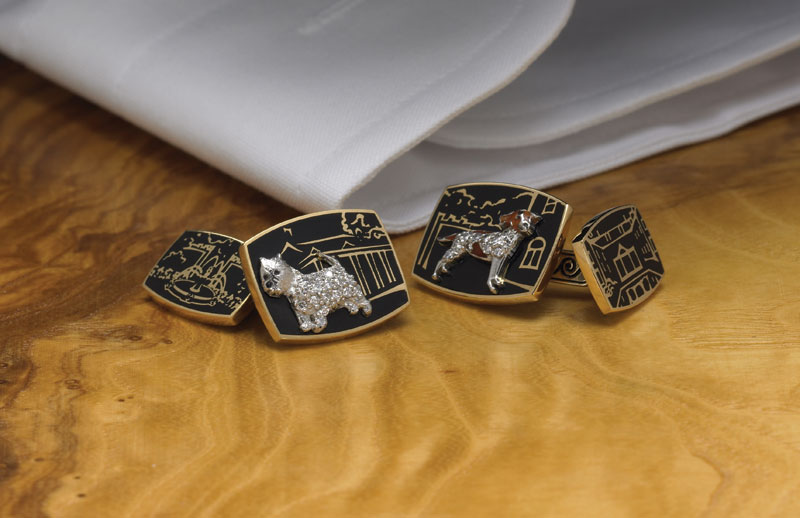
Cynthia Renee, who specializes in custom jewellery, commissioned the cuff links in Figure 1 after suggesting the project to her client. She knew he really liked cufflinks and unusual things and had the budget. She recommended making cufflinks with scenes from his home and images of his family’s Jack Russell and West Highland Terrier dogs. He liked the idea and agreed. He provided photos of his dogs and the exterior of his home and its garden, which were depicted with engravings, diamonds, and black lacquer. It took six months to design and engineer these handmade cufflinks.
Antique portrait jewellery and its influence on modern jewellery
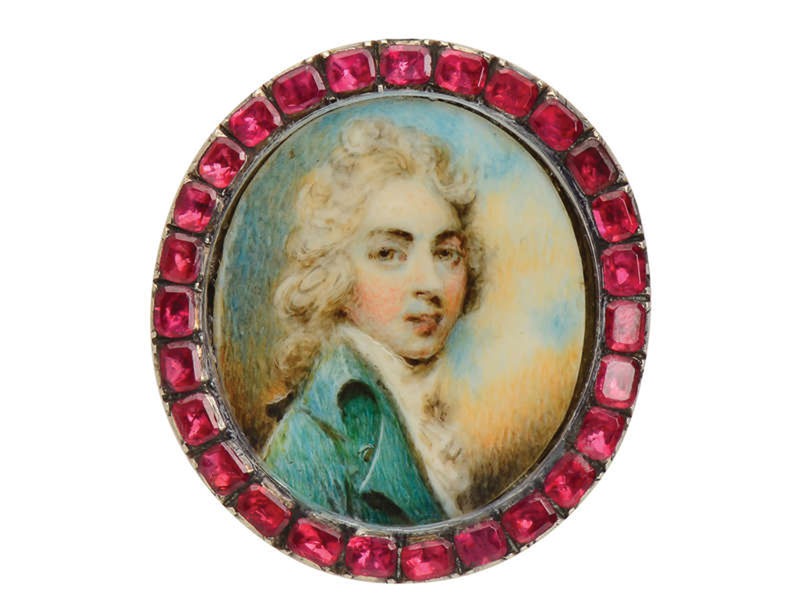
Portrait jewellery was designed to immortalize people and express loyalty and love to them in the Georgian era. This period extended from 1714 to 1837, when permanent photography was not available. Miniature portraits were set under crystal or glass in rings; pendants were made with small hand-painted portraits on ivory, animal skin, or card, set in gold or silver and often surrounded by gemstones backed in foil or silver. Figure 2 is an example of a pendant (circa 1780) from Georgian jewellery. It features almandine garnets set into silver, surrounding the hand-painted miniature portrait.
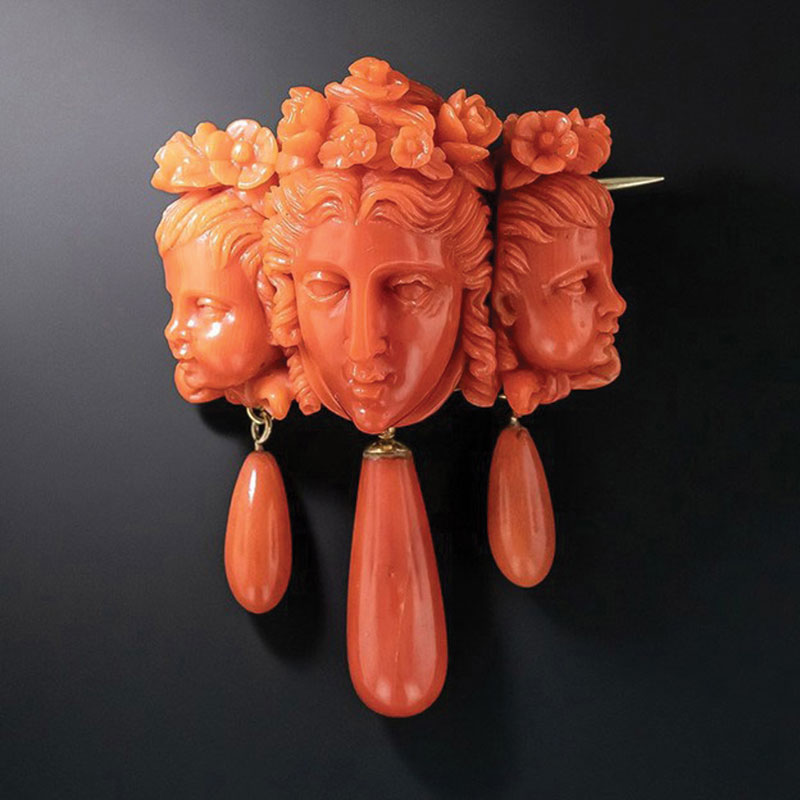
Carvings were also used for antique portrait jewellery. The hand-carved Mediterranean coral brooch from Lang Antiques in Figure 3 depicts a Victorian mother and her twin daughters, each donning flowers. The Victorian period extended from 1837 to 1901; this piece is circa 1875. Women were a common motif alongside floral patterns, reflecting the era’s appreciation for nature and beauty.
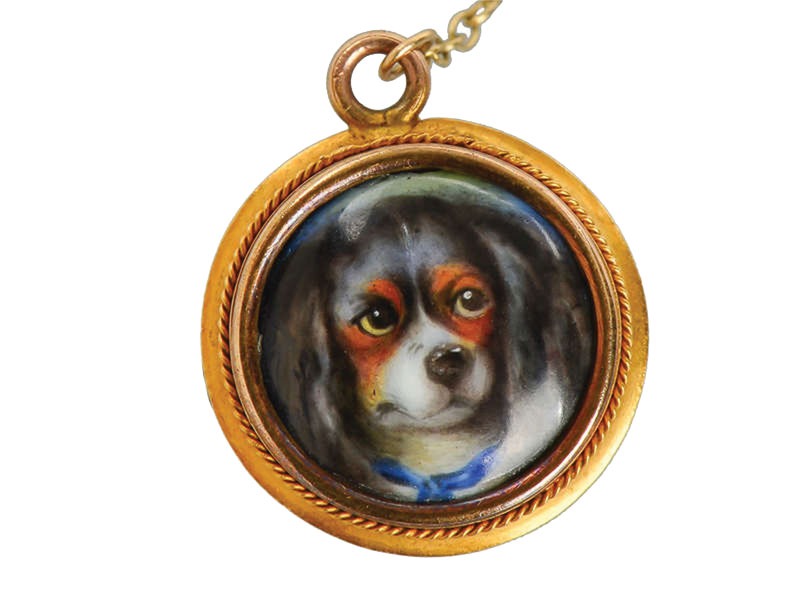
Pets were important to the Victorians, so jewellery was sometimes designed to include an image of a cherished dog or cat, as seen in Figure 4. It is a miniature enamel spaniel dog brooch/pendant from Georgian Jewellery. It was probably painted by William Bishop Ford, who studied under the most celebrated miniaturist enamel painter of the mid-19th century, William Essex in England, a favourite of Queen Victoria.
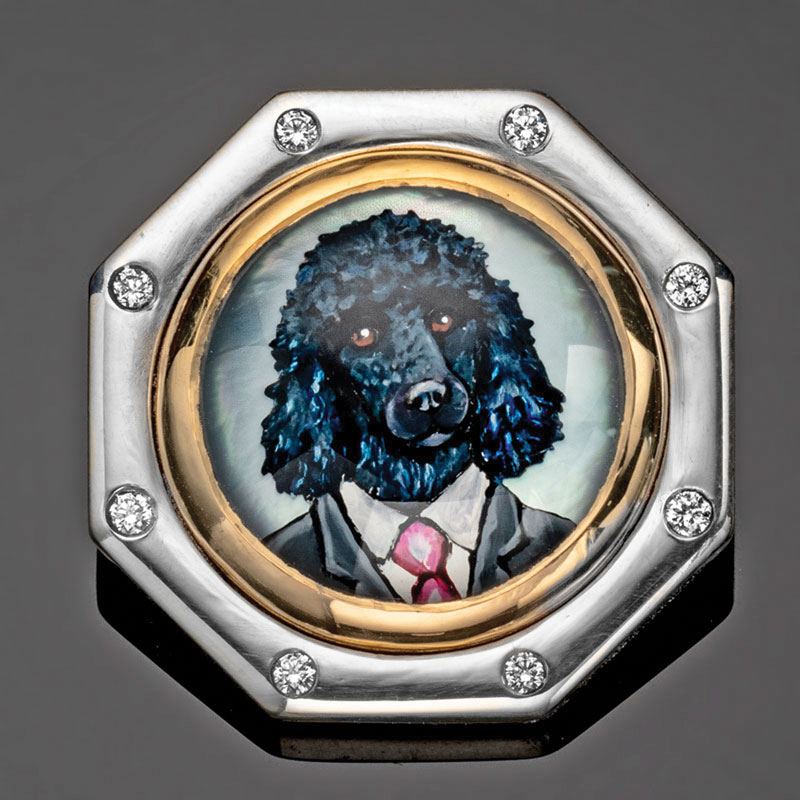
The miniature paintings of Essex set in jewellery were so famous that reverse-carved rock crystal miniatures of the mid-18th century were also called “Essex brooches,” even though Essex only did enamel paintings, not intaglio carvings. Essex animal portrait brooches are available today from Rémy Rotenier, a French jewellery designer and painter of fine art miniatures based in Albuquerque, N.M. An example is shown in Figure 5. It is a reverse-carved rock crystal cabochon with an image of a poodle, reverse-hand-painted in oil, then backed in mother-of-pearl and trademarked as the Rémanimals brooch. All Rémanimals portraits are framed in sterling silver set with diamonds, and given thick, 22-karat gold bezels. On the back, a baguette diamond is set (as the centre of a dog bone for dog portraits). There is also a round diamond set next to his signature, as a secret “wink” to the wearer. He dresses the animals in human clothes to enhance their natural elegance and celebrate our close relationship with them.
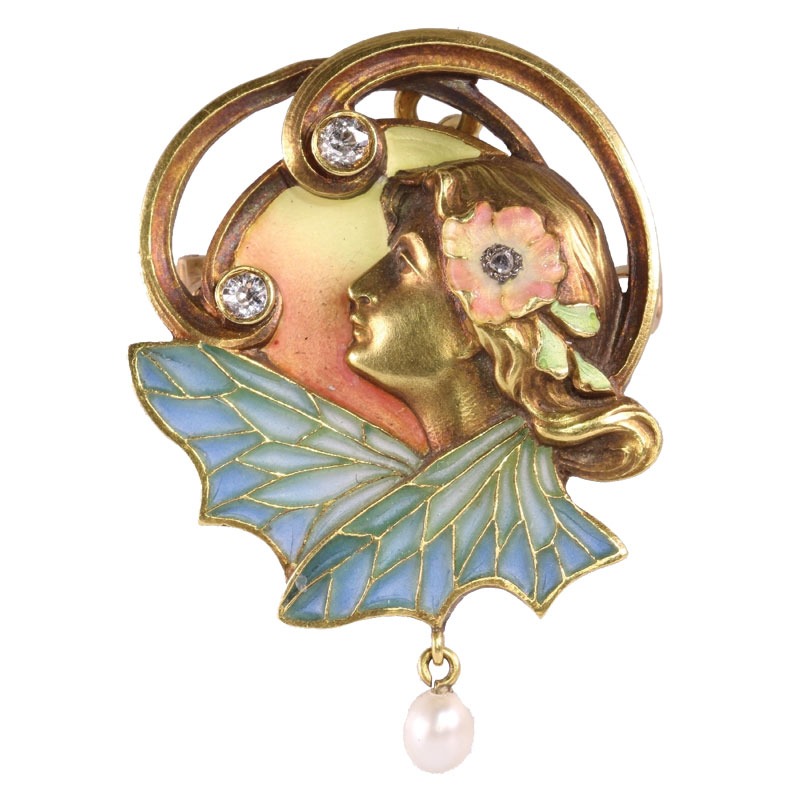
Women motifs were as common in Art Nouveau jewellery as they were in Victorian jewellery. Created in France around 1890, the Art Nouveau movement sought to modernize jewellery design. It was also a reaction to events in French society at the time, including women’s fight to secure more rights for themselves. An example from the Art Nouveau period is the plique-a-jour enamel brooch/pendant in Figure 6 from Adin Fine Antique Jewellery. Plique-a-jour (French for “letting in daylight”) is a technique of applying enamel between fine metal frameworks without a backing that creates a stained-glass window effect. Famous Art Nouveau jeweller, René Lalique, was noted for his plique-a-jour enamel jewellery.
How to initiate portrait jewellery sales
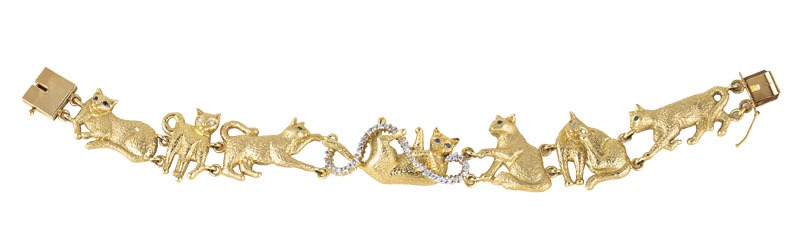
Mark Schneider, a custom jeweller in Long Beach, Calif., gets commissions for portrait jewellery during conversations with his clients about their lives and interests. The necklace and bracelet in Figures 7 and 8 were the result of a discussion he had with a client about her seven stray cats. After she related how important the cats were to her, Schneider suggested he make some jewellery portraying them. When she agreed, Schneider and his sketch artist did a pencil sketch of a bracelet with seven cats in different positions and a necklace with one of the cats. The client liked the sketch, so their master jeweller hand-carved a wax model for her to view. The wax gave the client a more accurate idea of how the finished piece of jewellery would look. Next, they cast the metal in the client’s choice of metal—14-karat gold. The Mark Schneider team then cleaned the hand-set diamonds the client had requested for the ribbon. The final step was to choose the finish type, which in this case was a textured finish, but could have been high polish, satin, hammer, or sandblasted, depending on the client’s preference.
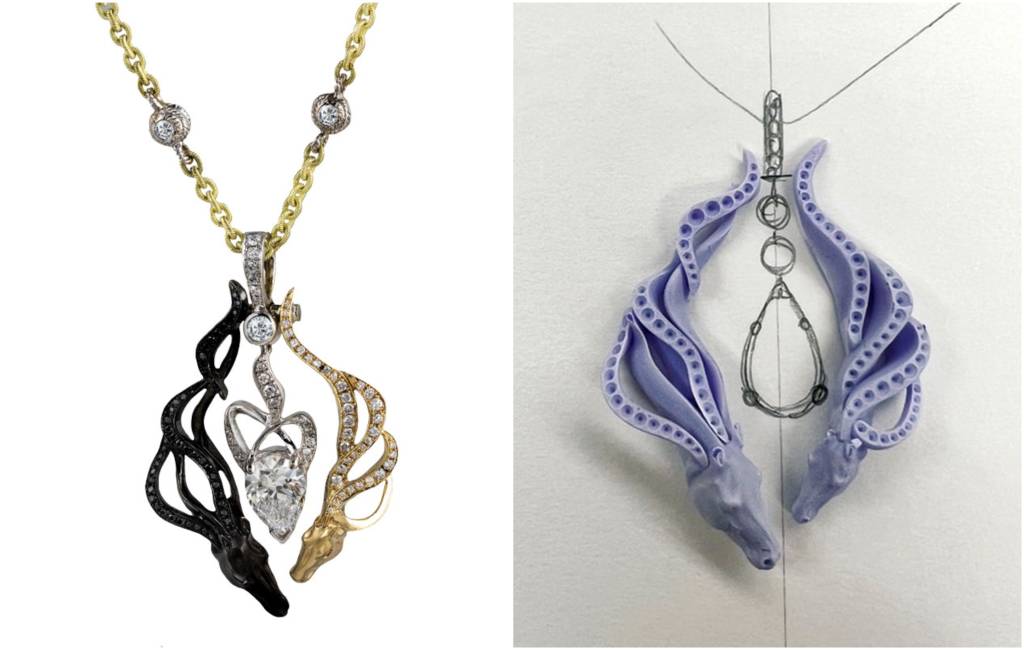
Schneider proposed the horse pendant in Figure 9 to a horse owner as a gift for his wife. Figure 10 shows the wax and sketch used when designing the pendant. The client liked the finished pendant so well that he ordered three more horse pendants—one for his daughter, one for his trainer, and one for the owner of the equestrian centre; and Schneider ended up selling four pear-shaped diamonds at the same time.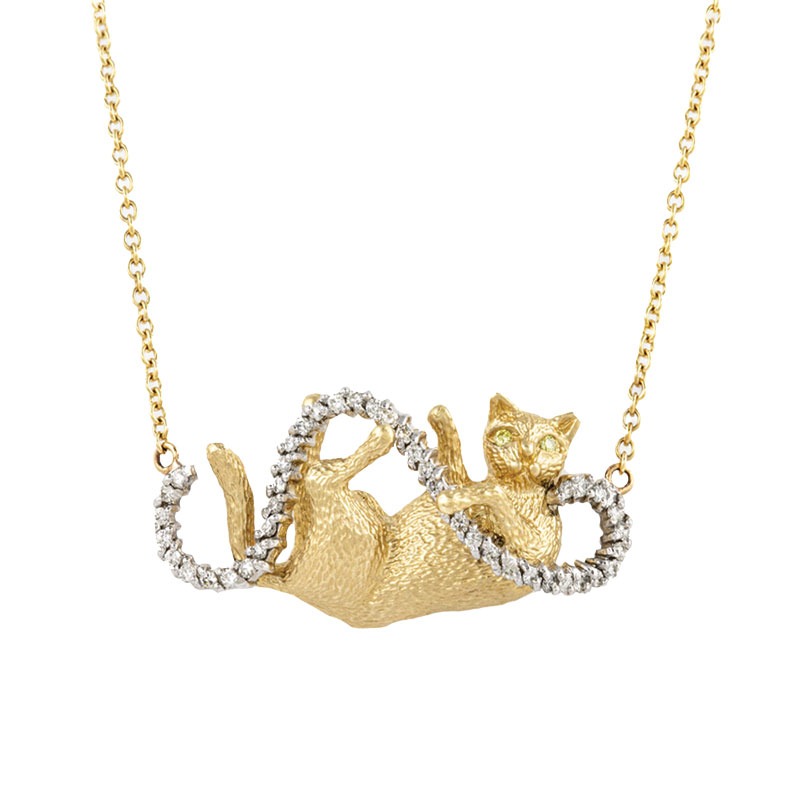
Schneider loves animals and is always ready to propose animal jewellery appropriate for his clients. His jewellery receives an appraisal, a certificate of authenticity, and any stone certification for the stones selected for the piece.
Benefits of portrait jewellery
Customers appreciate custom portrait jewellery because it allows them to express their affection for people and pets they love. It also attracts more attention than mass-produced pieces and often serves as a conversation piece, during which admirers may ask where it was purchased. This, in turn, provides free publicity for the jeweler who made it.
Portrait jewellery allowed Rotenier to create his Rémanimals™ brooch collection, which he features on the home page of his RémyRotenier website. Viewers are immediately invited to commission personalized brooches not available elsewhere, thereby generating new business for him.
Customers seldom walk into a store and ask for portrait jewellery. Jewellers normally must propose it. Cynthia Renée and Mark Schneider engage in conversation with their clients to learn about them and their interests, and they keep records about client preferences. This allows them to suggest portrait jewellery ideas that their clients can’t resist.
If you would like to grow your business and enhance your reputation, ask your clients good questions, listen carefully, and consider suggesting original portrait jewellery pieces. You and your client will enjoy creating sentimental jewellery together, and you will both experience a deep sense of satisfaction when you see the finished piece.
Renée Newman, GG, is a gemmologist and the author of ‘Jewelry Handbook: How to Select, Wear & Care for Jewelry’ and 14 other books on jewellery and gems. She became interested in jewellery design while overseeing jewellery quality control at the Josam Diamond Corporation in downtown Los Angeles. For more information about Newman and her books, visit ReneeNewman.com.
Sign up for our newsletter
Get all the latest news and features from Jewellery Business. Submit your email below to get our twice-monthly newsletter.
Products


Read the Latest Issue
