
Bridal pearls: A timeless elegance of love and tradition
Learn how pearls can elevate and complement wedding day styles.

Years ago, I came across a phrase: “Pearls and brides are synonyms.” And it is true, as these two are connected by culture and symbolism.
The pearl is an organic gemstone with a recorded history that predates most other gems. Formed within a living mollusk, a pearl may be seen as a metaphor for life, love, and marriage.
Indeed, a pearl can symbolize love and marriage—it takes time to form; during its growth, it encounters various challenges before becoming beautiful, valuable, and rare. The same is true for love and family life. Therefore, pearls serve as a metaphor for love that deepens over time, overcoming difficulties and obstacles to become precious and unique.
About pearlcore weddings
Pinterest identified the term “pearlcore” as a rising trend in its 2022 report, a movement that has gained popularity. It describes a bridal esthetic, making pearls the central visual theme at the wedding ceremony. Pearls are incorporated during all stages of the celebration: adorning the bridal gown, veil, and shoes; worn as jewellery; and even integrated into the decor.
This is a bold manifestation of the renaissance of pearl jewellery that started years ago. A pearlcore wedding combines the exquisite, timeless elegance of pearls with contemporary trends and designs.
It is no coincidence that the tradition of wearing pearls at a wedding is growing in popularity. Fashion is cyclical—pearls were very trendy in the 20th century, considered a classic; then, in 1980-1990, they temporarily fell out of favour (think of “grandma’s pearls”) only to come back stronger and more reimagined.
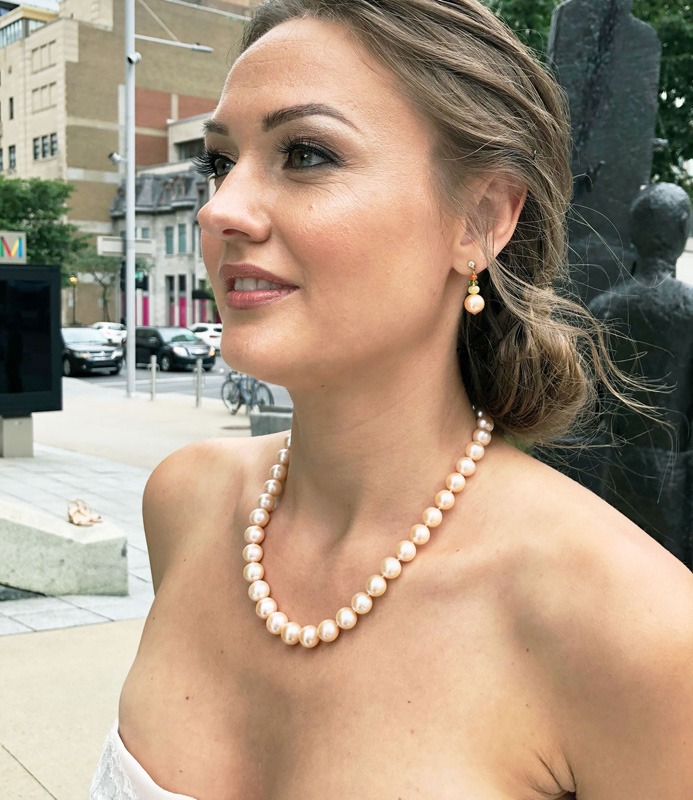
Pearls and weddings in history
In ancient India, pearls were associated with longevity, prosperity, and life preservation.
One of the earliest connections between pearls and marriage is found in Hindu tradition. Legend says the deity Krishna gave his daughter a precious gift on her wedding day—a beautiful pearl.
And India preserves this tradition—many brides wear pearls on their wedding day.
Ancient Greeks considered pearls the wedding gem.
During the Middle Ages and the Crusades, knights gave pearls to their brides. Over time, pearls became a symbol of love.
Thus, pearl jewellery is a traditional bridal adornment. There is also a longstanding custom of giving pearls as wedding gifts to brides, bridesmaids, and the mothers of the newlyweds.
Today, we observe a continuation of an ancient tradition of giving pearl jewellery to the bride on the wedding day, by the father or by the groom.
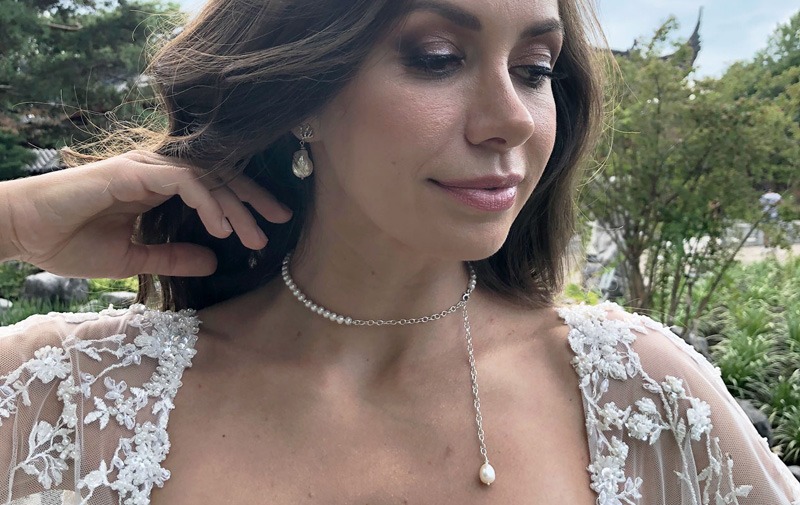
Sustainability of pearl jewellery
Another significant factor driving the increasing popularity of pearls is their sustainability. The link between pearls and sustainability was first discussed in 2010, and today, it is more important than ever as many consumers, especially the younger generation, are concerned about environmental issues and responsible sourcing.
Pearls are naturally sustainable because they only grow in clean, unpolluted water. As a result, pearl farming can have positive environmental effects, such as improving water quality, protecting coral reefs, safeguarding waterways and marine life, and providing shelter for small fish.
Nowadays, pearl-producing countries worldwide, including China, pursue various initiatives to make pearl farming more responsible and environmentally beneficial.
This fact should be specifically highlighted by retailers selling pearl jewellery, as it adds significant value.
Which pearl jewellery are modern brides looking for?
Modern brides look for pearl jewellery that complements their wedding gown and enhances their overall style without overwhelming it. Pearls are well suited to bridal wear because of their refined, understated elegance, and their wide variety of sizes, shapes, and colours makes it easy to match any bridal look.
Classic pieces such as white pearl earrings, necklaces, and bracelets made with Akoya, South Sea, or freshwater pearls remain popular, though many brides choose updated versions featuring unique clasps or distinctive pendants.
Fashion‑forward brides often select statement designs, including asymmetrical earrings or pieces that pair pearls with coloured gemstones or diamonds for added contrast and freshness. Even traditional strands can be reimagined as modern chokers with bold clasps. Baroque and Keshi pearls appeal to brides seeking individuality, offering organic shapes and strong lustre that make each piece one‑of‑a‑kind.
Minimalist brides may opt for simple studs, a delicate bracelet, or geometric designs that offer a clean, contemporary look. With the diversity of cultured freshwater pearls, there is pearl jewellery suited to every style, preference, and personality.
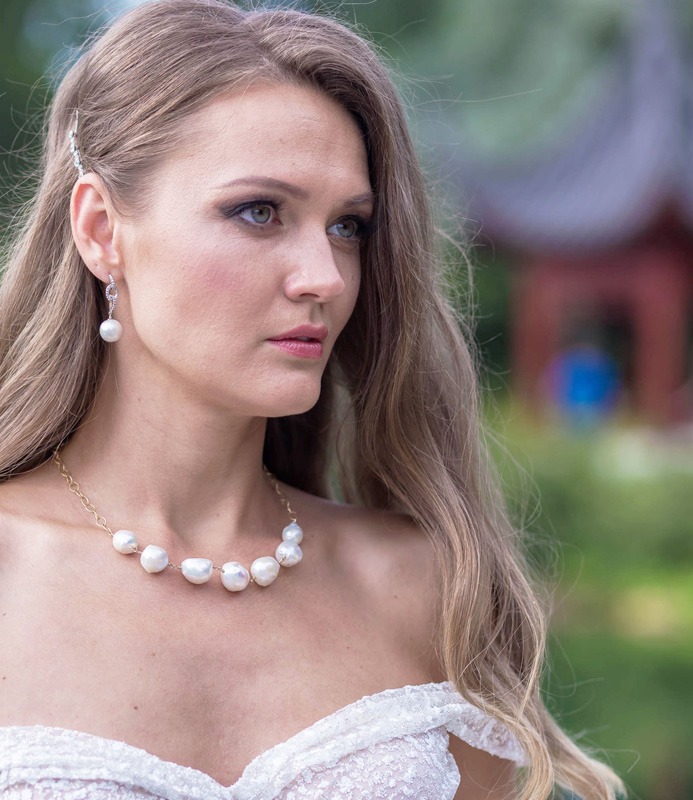
Colourful pearls for a wedding
Colour has long been prominent in fashion, and brides seeking a modern, distinctive look often turn to coloured pearls instead of traditional white accessories.
Cultured freshwater pearls come in natural pastel shades such as pink, apricot, lavender, and champagne, offering a subtle glow that aligns with the quiet luxury trend.
These hues add elegance and individuality, helping a bride stand out while still appearing refined and feminine.
Coloured pearl jewellery can elevate a bridal look and may even complement her skin tone. A white gown paired with pastel pearls creates a sophisticated, memorable effect that remains stylish long after the wedding day. With pearls now worn casually as well as formally, her wedding jewellery becomes a versatile, lasting part of her wardrobe.
Budget considerations
Pearl jewellery is available at a wide range of price points, which makes it accessible to many buyers.
Cultured pearls come in both freshwater and saltwater varieties, and freshwater pearls typically cost far less due to differences in how they are grown, while still offering comparable qualities such as lustre, colour, size, and shape.
Simple freshwater pieces, like stud earrings or a delicate bracelet, can start around $100 to $150, while elaborate freshwater necklaces may reach several thousand dollars.
Saltwater pearls, including Akoya and South Sea, are priced higher. With options ranging from mass-produced designs to unique, high-quality pieces, retailers can appeal to budget-conscious shoppers and luxury buyers through tiered pricing.
Mass-produced versus designer pearl jewellery
Of course, there is a big difference between mass-produced pearl jewellery, which is often lacking in uniqueness and worn by many others, and one-of-a-kind or custom-made pieces.
Unfortunately, most jewellery stores sell mass-produced pearl pieces with few options. While designer or custom-made pearl jewellery often comes in limited editions or as unique pieces, it emphasizes quality, details, balance, and proportions. It tells a story.
Since a wedding is one of the most significant events in life, a bride wants to look beautiful and memorable on this special day. Instead of a traditional pearl necklace or bracelet, she often opts for stylish contemporary pearl jewellery as an accessory.
Therefore, it might be worthwhile for a jewellery store, alongside traditional pearl jewellery, to feature a section showcasing fresh, unconventional creations by independent designers. In today’s world, where people seek uniqueness and personal expression, wearing a one-of-a-kind pearl piece is an excellent choice, especially for a wedding. Every bride wants to stand out and be memorable. She will likely enjoy wearing a unique pearl jewellery piece made for her and with her involvement, as she can share this emotional story on many occasions. This special piece then becomes a family heirloom, and the story continues.
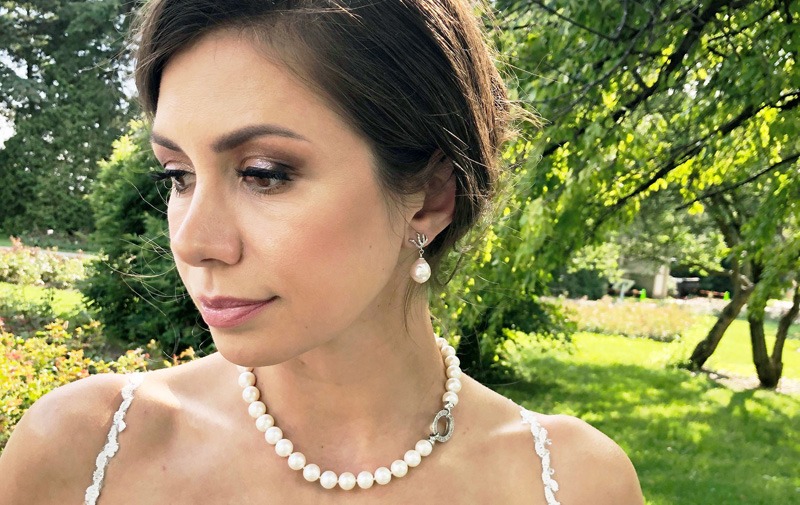
Jewellery stores’ greatest advantage
Despite strong online competition, jewellery stores hold a key advantage: customers buying important pieces, especially wedding jewellery, often want to see, touch, and try on items in person, and may even customize them.
This gives retailers valuable opportunities to build personal connections, understand customer needs, and turn first‑time visitors into loyal clients.
Knowledgeable staff are essential; they should be able to explain the differences between freshwater and saltwater pearls, emerging varieties, and current jewellery trends.
When shoppers receive clear, expert information, trust develops, increasing the likelihood of a sale and repeat business. Retailers can also capture additional purchases for bridesmaids or family members.
Carrying both contemporary, design‑forward pieces and mass‑produced items ensures broad appeal, and unique pearl jewellery often offers stronger margins.
To rent or to buy?
Given budget considerations, the question arises whether Canadian companies rent real pearl jewellery for weddings. Research suggests very few, if any, offer this service, likely because renting presents several challenges.
Some brides may want the look of luxury without the cost, especially if they do not expect to wear the piece again. However, many brides value sentiment and heirloom‑quality items, making rental jewellery feel less meaningful for a wedding day.
There are also practical concerns. Real pearls are delicate and easily damaged by cosmetics, perfume, hairspray, and even minor mishandling. Because wear and tear may not appear immediately, rental pieces could deteriorate quickly, creating risk for jewellers.
Questions also remain about whether renters would follow proper care instructions for a one‑day use. For these reasons, many retailers may hesitate to offer rentals. A possible compromise could be a purchase‑credit program if the bride later chooses to buy the piece.
Conclusion
Throughout history, pearls have been traditionally worn at weddings and given as wedding gifts. Today, they remain one of the staples of wedding jewellery. With their subtle, refined beauty, pearls can easily and successfully be incorporated into contemporary bridal designs.
Bearing all the above in mind, including the history and traditions of pearls as well as the recurring popularity of pearl jewellery, retailers should view it as a profitable addition.
To succeed, a modern jewellery retailer should offer pearl jewellery for various customer segments. Additionally, the retail staff must be well educated about pearls and proactive—salespeople should attend workshops and exhibitions to expand their knowledge of new trends.
The salespeople should be able to confidently discuss pearls professionally: understanding their history and origin, various types, new varieties, and features, as well as pearls’ symbolism and reasons for their reinvention. Current fashion trends should also be mentioned. Clearly, this will appeal to customers seeking meaningful purchases and help build trust that can lead to increased sales.
Olga Shevchenko is a fellow of the Gemmological Association of Great Britain (FGA). She is a jewellery designer creating contemporary, unique pearl jewellery (www.pearljewelleryexpert.com). She is a founder of Jewelry Olga, based in Montreal (since 2009). She can be reached at info@pearljewelleryexpert.com or (514) 884-4980.
Sign up for our newsletter
Get all the latest news and features from Jewellery Business. Submit your email below to get our twice-monthly newsletter.
Products

Read the Latest Issue
