
Platinum: The original prestige metal
As gold prices soar, platinum’s rich history reveals its enduring appeal
The entire world is watching the price of gold soar. Ten years ago, it would have been very rare for a regular member of the public to be able to tell me the current price of precious metals. Sure, there were those who had just been out shopping and asked in shock, “Do you know how much they want for a simple gold chain?” However, if I asked them if they knew how much gold was per ounce, they really couldn’t tell me.
These days, nearly everyone who sits across from me to discuss auction options starts by asking questions like, “What happened to gold?” and “How did gold get to $5,000 an ounce?” I point out that the $5,000 price is in United States dollars, and it’s even more in Canadian.
How is this pertinent to a discussion of what is considered the most prestigious and luxurious precious metal, platinum?
Historically, platinum has also almost always been the costliest of the precious metals. Often, platinum has been twice the price of gold. When I mention the price of the precious metal, I am speaking of the pure raw material, not finished jewellery made in the metal.
So, today, when we discuss the price of precious metals, we are essentially comparing pure gold to pure platinum or pure silver. Ingot to ingot, ounce for ounce.
Metals are mined and refined, and the refining process produces the pure and distinctly separated precious metals. The Royal Canadian Mint is famous for its ability to refine to 99.99 per cent pure gold, and also produces a premium 99.999 per cent pure gold!
In jewellery, we rarely use pure metals; they are usually alloyed, or melted together with other metals, such as copper, to produce the metal we wear. The precious metals are used in exact proportions, but the exact alloying metals are not dictated by regulation; the aim is to produce jewellery metals that are the most resilient, avoid wear and tear, or are simply more affordable.
In Canada, we use gold in different purities for jewellery, such as 10 karat, 14 karat, and 18 karat. When we understand pure gold to be 24 karat, these are proportions, with 10 karat meaning 10 parts gold to 14 parts other metals.
Platinum, on the other hand, is mainly used in one purity. We don’t use karat proportions when describing platinum; we use the name of the metal and don’t identify the ratio, because 95 per cent pure is essentially the only purity we use. In Canada, according to the Precious Metals Marking Act and Regulations, “Platinum,” “Plat,” or “Platine” (en Français) are the permitted marks, and when stamped on jewellery, it means the item is at least 95 per cent pure platinum, or at least 95 per cent platinum and iridium or ruthenium.
Hold on, what’s iridium or ruthenium? Platinum is one metal in a group that is often found together. Platinum, iridium, ruthenium, osmium, palladium, and rhodium are all platinum group metals, and while we don’t make jewels out of many of them, palladium is also occasionally used for jewels, and we do use rhodium as a starkly white and bright metal for plating jewels. However, we do use platinum regularly.
These metals are all related but are quite different. The density of a metal is its weight by volume, specifically the weight of a cubic centimetre of the metal. For reference, one cubic centimetre of water weighs one gram, so its density is 1.00. Platinum’s density is 21.45, gold’s is 19.32, and palladium’s is 12.02. So, palladium is a little more than half the density of platinum. If you encounter palladium jewels, they are surprisingly light for a metal that otherwise is visually somewhat similar to platinum.
Gold has been known for thousands of years; gold jewels are found in ancient collections from around the world. Platinum, like gold, is a noble metal, meaning that it is not affected by environmental factors such as light, humidity, or chemical attack, so why don’t we find platinum in ancient collections, tombs, and graves?
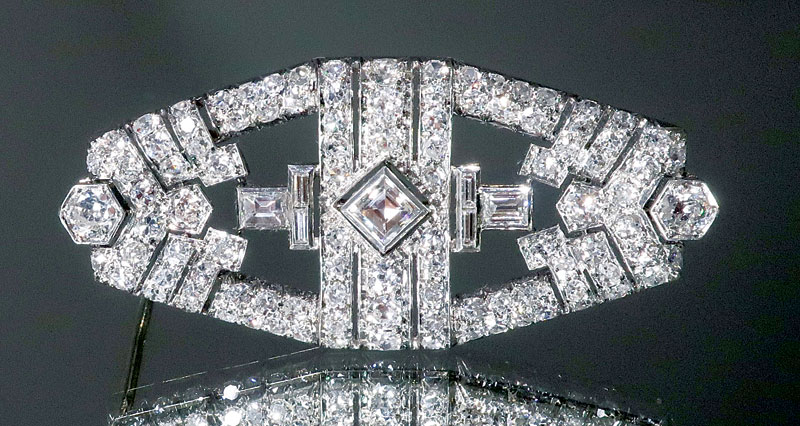
We tend to think of platinum as a metal that didn’t exist before the 20th century. Well, obviously, it didn’t suddenly arrive. Platinum has been around for as long as gold, but it wasn’t until the 20th century that people worked out how to reliably and routinely melt the metal.
However, while Europeans didn’t make any quantity of platinum jewellery before the 20th century, the use of this extraordinary metal takes us to pre-colonized South America.
It’s very rare to find pure metals in nature. If I’m fortunate enough to find a giant gold nugget (my retirement plan includes finding a giant gold nugget!), the yellow treasure will not be pure gold. Metals found in nature are usually combinations, or natural alloys, of several metals. The combinations of metals will vary based on the geology of one location compared to that of another. Platinum found in nature is generally not alloyed with gold, but the two metals are found essentially affixed to each other, as separate components.
Gold was one principal desire of the Spanish conquistadores in the Americas, and they felt that they had hit the jackpot, finding or capturing huge amounts of gold. However, they almost gave up because the gold was “contaminated” with what they called “platina” (a variation in the Spanish name for silver). The Spanish found that the gold was mixed with particles of this unusual white metal that could not melt (Oppi Untracht, in his book Metal Techniques for Craftsmen (Doubleday, Garden City, New York, 1975), states the melting point of gold is 1,063 C and the melting point for platinum is 1773.5 C), and these pesky white metal particles could only be separated by essentially physically pulling out the “platina” which, in the 1700s, they threw away in the Bogota River and the Cauca River (it might be worth going on South American holiday with a sieve?).
A gold nugget might be 70 per cent to 95 per cent gold, give or take, with silver, copper, iron, and other metals. In the erosion process, particles of metals separate and combine, and as they are carried by rivers, particles of platinum and gold can bind into a cohesive combination.
The early peoples of South America could not melt platinum, but had developed good metallurgical skills, and worked out how to separate platinum from gold by melting gold and holding the melt while the denser platinum sank to the bottom and then cutting the different colours of metal apart.
Mueso del Oro, in Bogotá, Colombia, features an extraordinary collection of artifacts made before Spanish colonization. Some of these gold items feature elements that are entirely platinum, but date to at least 1,300 (or more) years ago.
Jewellery historian Jack M. Ogden, in The Journal of Egyptian Archaeology, Vol. 62 (1976), pp. 138-144, “The So-Called Platinum Inclusions in Egyptian Goldwork,” describes the analysis of ancient Egyptian gold archaeological artifacts in the British Museum, and the finding that particles of platinum are found in a good number of these ancient golden items. While some have contended that the ancient Egyptians were aware of platinum as a distinct metal, it seems likely that they thought of it as a type of silver, and, unlike the ancient peoples of the Americas, didn’t use it intentionally as a separate metal.
The Spanish, determined to solve the “contamination” problem with South American gold, sent specimens to scientists in Europe, but the metal had not yet been identified as a unique element. In 1751, Swedish scientist H.T. Scheffer, student of Anders Celsius (of temperature fame), pronounced that platinum was a “new metal.”
With limited ability to work it and, therefore, low demand for platinum, the metal was cheap, and into the 1800s, British and Spanish gold coins were being counterfeited in platinum and then gold-plated. Because platinum and gold are both quite dense, the coins “felt” right in the hand.
By 1819, platinum had been discovered in good quantities in Russia and methods had been devised for a chemical process for purifying platinum. By 1829, Russia was producing platinum coins, and the metal increased in availab
ility and use. The price of the metal increased, making platinum a metal that eventually became more valuable than gold.
However, it was still not possible to melt platinum, so there was very little use of the metal in jewellery. In 1859, Cartier made a set of shirt buttons with a platinum component, and small items with some parts in platinum were produced. In 1881, Tiffany & Co. produced teacups with a platinum component.
The big change occurred in 1903, when two Frenchmen, Edmond Fouché and Charles Picard, discovered that a torch burning a combination of oxygen and acetylene could produce a temperature high enough to reliably and repeatably melt this complicated metal.
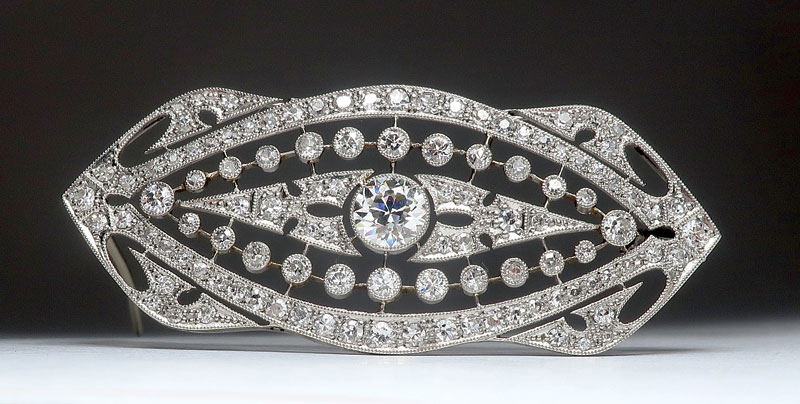
We never looked back. This seismic development in our ability to effectively work with platinum put the Western world in line with the ancient peoples of what we now know as South America. We entered the 20th century with the ability to make jewellery in metal for a new age. Platinum is a durable and hard-wearing metal that allows for fine and delicate jewels to be made.
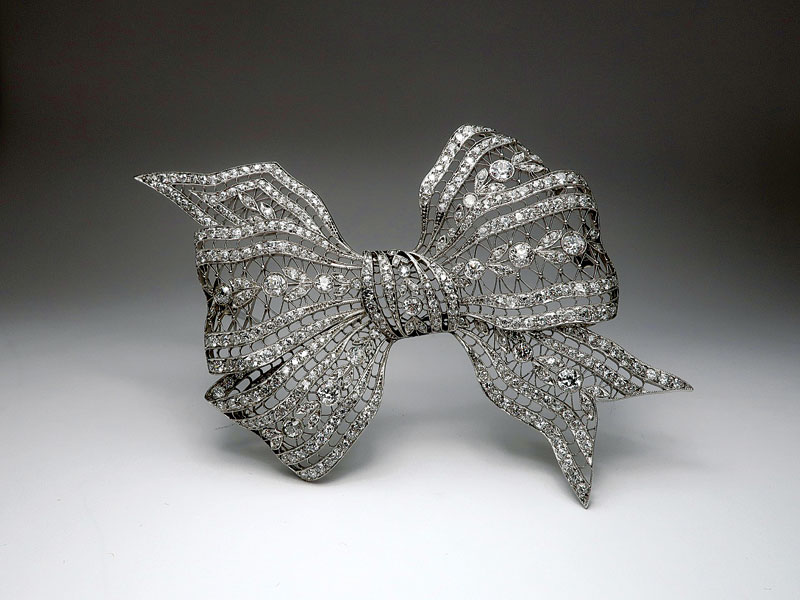
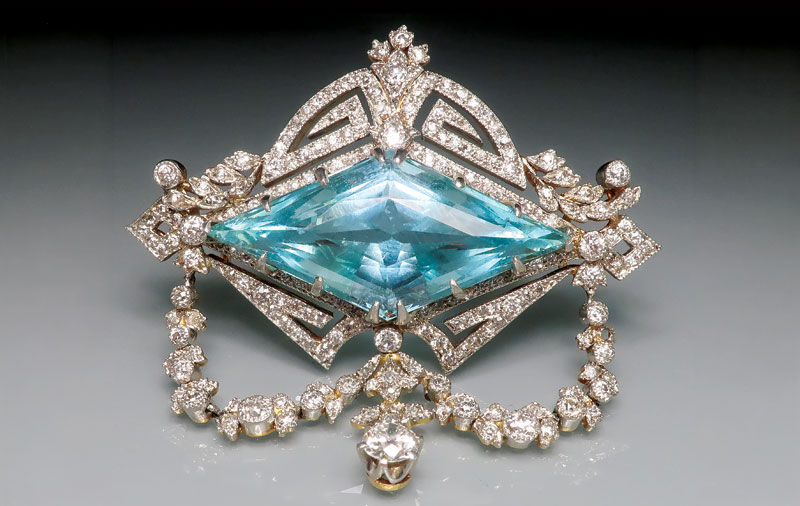
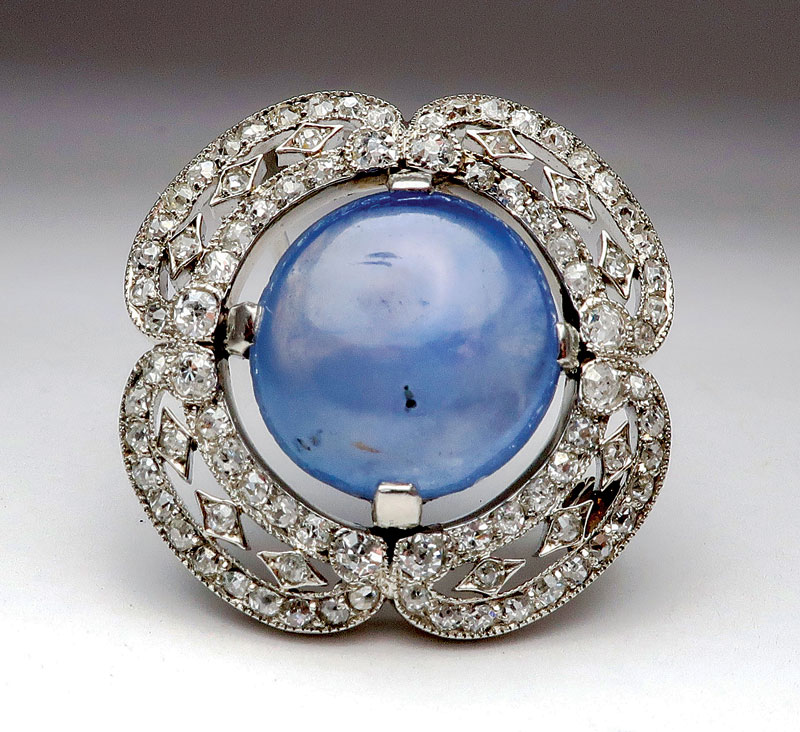
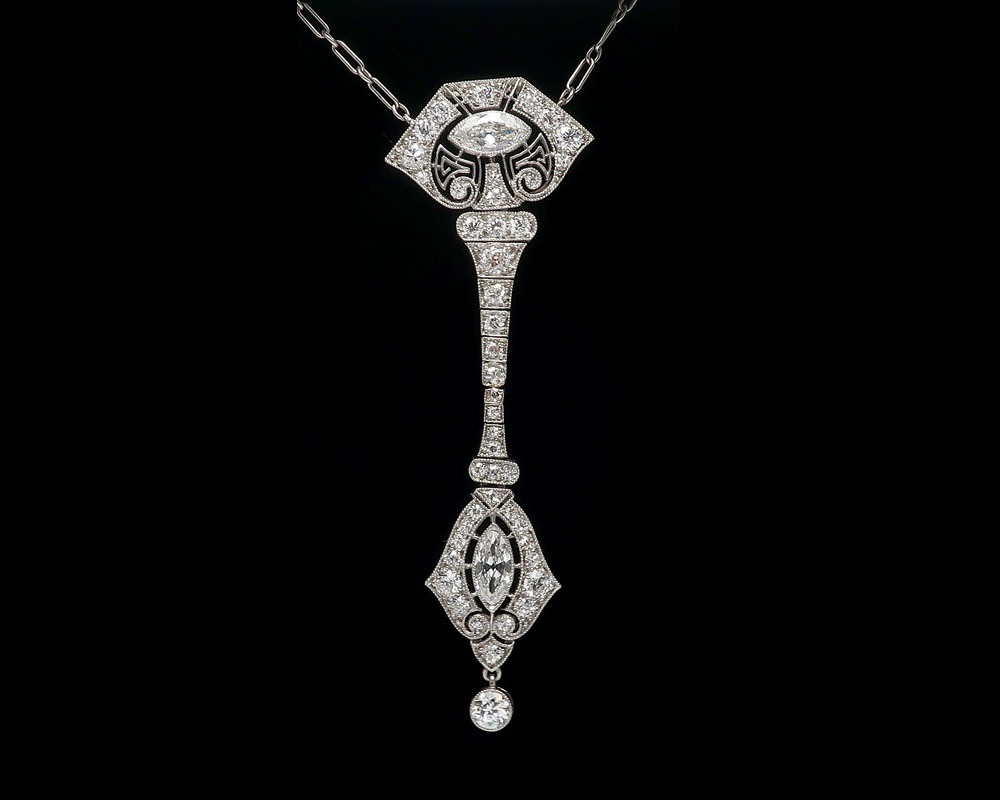
The period known variously as Belle Époque or Edwardian is best known for light tracery and fine open-work in platinum. Jewels of the period were a distinct break from the heavy jewels of the Victorian period. Queen Victoria died in 1901, and the 1903 discovery of the oxy-acetylene torch coincided perfectly with social and scientific changes, leading through the Belle Époque to the Art Deco period, and onwards.
In the 19th century, silver was the standard white metal used for setting diamonds, with platinum not being available and white gold only really coming into wide use in the 1920s. With platinum entering the jewellery market, fine jewels were made in this resilient white metal, and the form of diamond jewellery quickly changed.
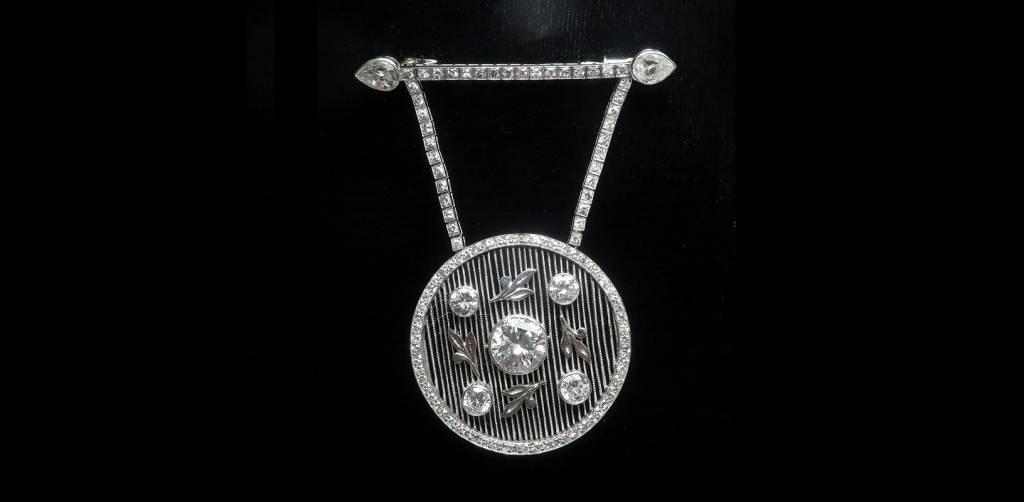
Platinum became the go-to diamond setting metal. However, according to mining information I have found through Statistics Canada, by 1925, gold was $20.66 per ounce (U.S. and Canadian dollars were at par) and platinum was $118.21 per ounce. So, platinum was definitely the prestige metal. Commonly, among jewels from the 1920s and 1930s, we see brooches in 14K gold, often die-struck with a very thin layer of platinum bonded to the front, giving the look of platinum without the cost of platinum.
Also read: Sneak peek: ‘A noble metal’
Platinum has always been used in a higher purity in jewellery than gold (with certain exceptions, such as traditional Chinese 24K gold jewels), with platinum being 95 per cent pure and 18K gold being 75 per cent pure. Also, platinum has been more costly to work with because it requires different methods, and only specialists work with the metal. Platinum remains the prestige and luxury metal it became in 1903 when we worked out how to melt the stuff.
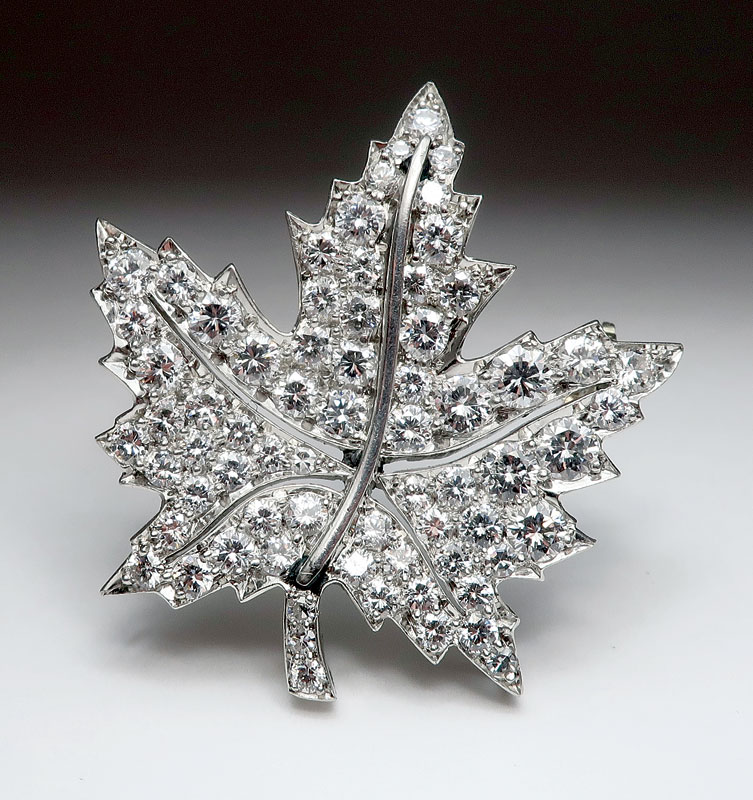
However, February 2015 was about the last time that gold and platinum were the same price per ounce. Essentially, since then, gold has accelerated in price, leaving platinum as a marvellous, durable, and unmatched jewellery metal that is now competitive with the price of 10K or 14K gold. It’s definitely worth adding platinum to your offerings, if this striking metal isn’t already in your showcases.
Duncan Parker, FGA, FCGmA, CAP-CJA, is vice president of Dupuis Fine Jewellery Auctioneers, based in Toronto. He has worked as a gemmologist and jewellery specialist, appraiser, and consultant for many years. Parker is an educator and lecturer on jewellery subjects and has been a speaker at international conferences with a focus on jewellery history. He has served as president of the Canadian Gemmological Association (CGA) and Jewellers Vigilance Canada (JVC). Parker can be reached at duncan.parker@dupuis.ca
Sign up for our newsletter
Get all the latest news and features from Jewellery Business. Submit your email below to get our twice-monthly newsletter.
Products
Read the Latest Issue
