
The language of time: How watches shape cinema
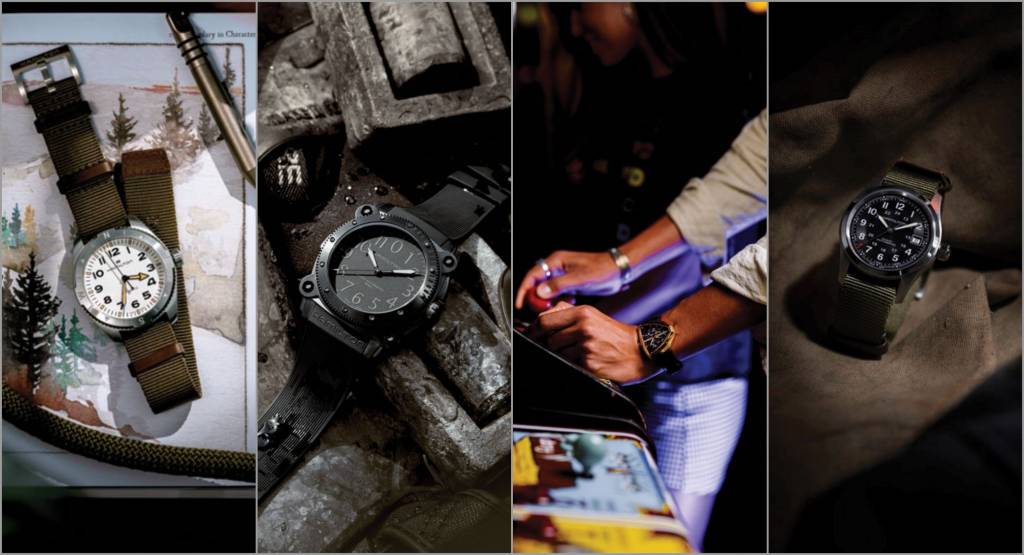
A watch ticking in close-up. A character glancing at their wrist.
A moment stretching just long enough to create tension. In cinema, time is not simply measured—it is constructed, manipulated, and felt. It shapes structure, pacing, silence, and the objects characters carry. Among those objects, jewellery—timepieces in particular—has held a persistent, understated role. It is rarely incidental. In film, almost nothing is.
Within visual storytelling, jewellery operates as a form of shorthand.
A ring can suggest continuity or entrapment; a necklace may hint at memory, inheritance, or loss. A watch, however, introduces something more precise. It sits close to the body, partially hidden, yet constantly active in meaning, measuring time while shaping how a character is understood within it.
From early Hollywood onward, accessories became extensions of narrative. As filmmaking matured, watches evolved into tools of restraint— often implying emotion rather than stating it. In suspenseful films such as North by Northwest and Apocalypse Now, time does not simply exist within the story; it becomes part of that architecture. This is what gives watches their unique position in cinema: they are functional objects that behave like metaphors. They also shape how that narrative is experienced. Costume designers often describe this as “psychology you can see”—the idea that a character’s inner life can be expressed through carefully chosen objects rather than explicit exposition.
Within this landscape, timepieces created by Hamilton Watch have become part of some of cinema’s most recognizable worlds, operating as narrative devices embedded within storytelling.
In Interstellar, the Khaki Field Murph functions as a bridge between distance, memory, and emotional time. In one of the film’s most memorable moments, the watch becomes a medium for communication across time, grounding an abstract idea in a deeply human gesture.
In Tenet, a custom Hamilton timepiece translates the logic of temporal inversion into a physical object, making an invisible concept tangible for the audience.
In Men in Black, the Ventura becomes part of an iconic uniform, its bold geometry helping define identity within the film’s universe. Across these films, the watches are not decorative—they actively shape the narrative language.
In recent years, video games have also absorbed cinematic language.
In this shift, the watch changes function again. It is no longer only a symbol observed by an audience, but an object experienced within a world. Rather than being seen, it is used, interacted with, and integrated into gameplay. This convergence between film and gaming has created a shared visual vocabulary—one that relies on consistency, detail, and immersion.
Within this evolving landscape of film and video games, Hamilton Watch occupies a space in storytelling culture. Its timepieces have appeared in film as integrated elements of character and world-building. That philosophy has gradually extended into gaming, where immersive environments demand the same level of precision and intentional design.
There is also a quieter recognition embedded in this shift: that stories are built collectively. Films and games are shaped not only by performers and directors, but by designers, editors, costume teams, and technicians. Ultimately, what connects cinema, jewellery, and gaming is not technology, but attention—attention to detail, to character, and to time as both structure and experience.
A watch does not simply tell time within these worlds; it reveals how time is felt.
Ayaz Aladdin Hasmani leads Blancpain in Canada. Previously, he held leadership roles across the watch industry, including HAMILTON Watch. He writes on horology, culture, and storytelling.
Sign up for our newsletter
Get all the latest news and features from Jewellery Business. Submit your email below to get our twice-monthly newsletter.
Products



Read the Latest Issue
