
Something old, something new, something borrowed
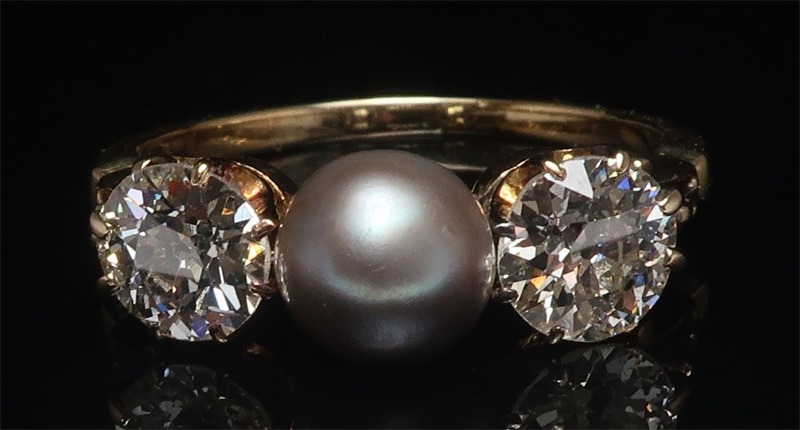
If you ask your elderly family members, “What are your most memorable jewels?”, you might be surprised to discover that “pearls” is the answer. Remember that you didn’t ask them what their most valuable jewels are, that might be different.
Many of us think of the most valuable jewel in our house as a diamond engagement ring (after the tiara, of course). With the unpredictable fluctuations in the price of diamonds, we might discover that grandma’s diamond engagement ring is, perhaps, no longer the most valuable jewel in the house.
However, that elegant yet simple cultured pearl necklace that’s migrated to the back of the drawer, or to the lowest tier of the jewellery box, probably has more stories preserved in its shiny nacre than any other jewels in the collection.
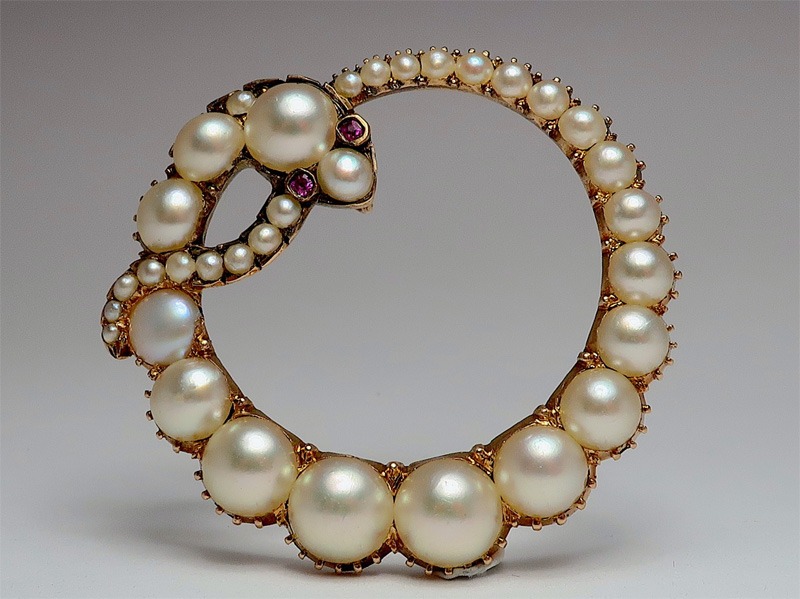
I once asked one of my daughters whether they would like a pearl necklace. The answer was a firm “No, if I want to wear pearls, I can borrow grandma’s.” Grandma is where pearls come from.
That same daughter later told me that pearls could, and would, be borrowed from grandma if a friend was getting married. I was informed, “Everyone wears pearls to a wedding.”
It’s a certainty that if you go to a wedding, there will be a lot of pearls. Almost without fail, brides wear pearls.
In planning the wedding outfit, pearls are among the first things acquired, at least once the neckline of the outfit has been decided. A plunging neckline will require different pearls from a high neckline, or a shirt and jacket. So, the clothes might come first, but the jewels certainly come next.
We may see the bride and groom both wear pearls. Larger South Sea cultured pearls are often seen on people of any gender; look at the red-carpet parade during awards shows. This trend is translating to lots of people, and not just superstars. That’s always how fashion travels.
We might also see two brides, or two grooms, both wearing pearls. In this case, they often select complementary strands, purchased together, and often exchanged as wedding (or pre-wedding) gifts. Alternatively, these pearl necklaces are commonly received from mothers or grandmothers as gifts.
Pearls go with any outfit, of any colour, perfect at high society weddings at a luxury space, or in a modest event at a registry office, followed by a nice lunch. You can wear your pearl necklace down to the local coffee shop for a quick espresso, but the same pearls are a perfect fit at the opera later that night. Nobody will look oddly at your jewel choice in either case; either way, it will be perfect.
The idea of pearls being “old fashioned” is prevalent, but it is interesting to see how this evaporates when a wedding rolls along.
A classic wedding saying is, “Something old, something new, something borrowed, something blue.” I don’t know where that phrase originated, but at least three of those items could be (and often are) pearls. Mom may offer pearls for her daughter to wear: Something borrowed. While not all moms wear those pearls often these days, you might be surprised to see many people wearing pearls regularly; sometimes we just grow into things.
If mom is coming to that wedding, she may not loan her own pearls to the bride, because what do you wear to a wedding? Pearls. Mom probably has inherited grandma’s pearls, and that necklace can be bestowed on the bride, while mom wears her own pearls.
If we have grandma’s pearl necklace, it might need to be complemented with other accessories, earrings, of course, plus possibly a bracelet and ring. When I say “of course” about earrings, surely, one of the most common pre-wedding gifts is pearl earrings. The participants in a wedding will often wear pearl earrings. Bridesmaids routinely wear pearl earrings, and those earrings are often a gift from the bride.
The modern cultured pearl necklace is usually a uniform strand, meaning that the pearls are all about the same diameter along the whole length of the necklace. However, until the 1960s, most pearl necklaces tended to graduate with the largest pearls in the centre, and tapering to the back, where the clasp is usually found. One way to modernize grandma’s pearls is to suggest a clasp or make a clasp that matches the current owner’s style. Re-stringing with the new clasp at the front or on the side is a great way to change it up, too.
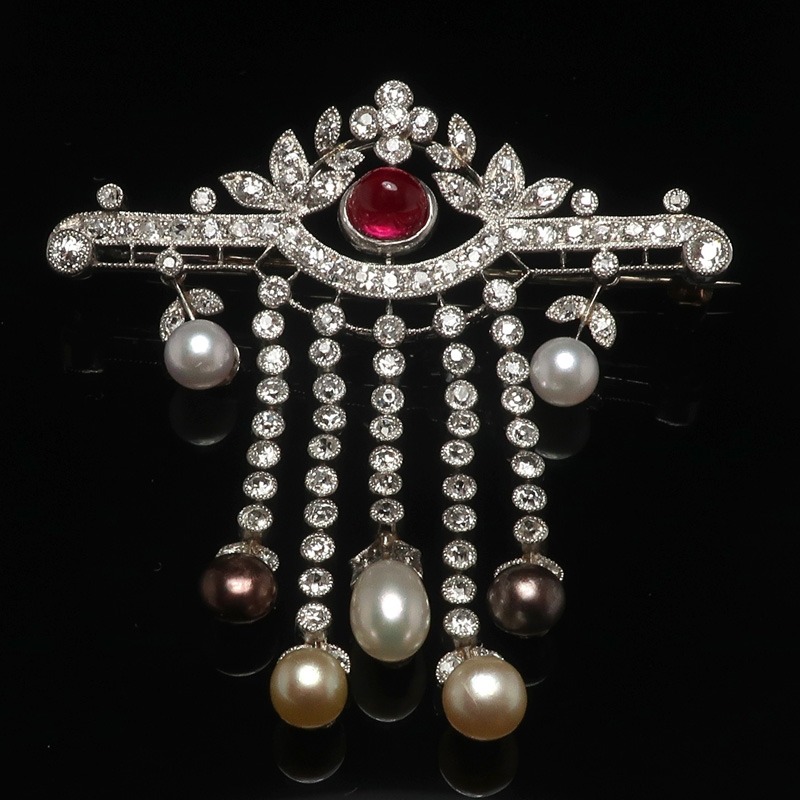
When we talk about cultured pearls, these are, of course, almost all the pearls you see in the retail market today. However, until just over a century ago, nearly all pearls were natural. There had been experiments with pearl cultivation for a long time, and for several centuries, Chinese growers had cultivated blister pearls grown on the inside of shells. Still, spherical “cyst” pearls were first routinely cultured (grown intentionally) in 1921. The first producer was Mikimoto, using methods developed by fellow Japanese experimenters Mise and Nishikawa.
After the introduction of cultured pearls, there was a massive increase in the availability of pearls and they became available to so many more people. In the culturing process, we help the oysters out by introducing conditions to induce pearl growth. Prior to culturing, pearls were accidental, were very rare, and tended to be the property of the rich and powerful. Now we can almost all afford some kind of pearls.
In the hierarchy of pearls, natural (non-cultured) are the rarest and most precious. Natural pearls have been found in oceans (saltwater), and lakes and rivers (freshwater). All other things being equal, saltwater pearls are generally more valued than freshwater pearls, whether they are natural or cultured.
Cultured pearls are traditionally “akoya,” Japanese pearls, mainly white in colour, measuring from a few millimetres up to about 9 mm. South Sea cultured pearls can be white from various locations, including Australia, black from Tahiti, or golden from several places, including the Philippines. South Sea cultured pearls are generally larger than akoya. Freshwater pearls, mostly grown in China, were once thought of as small things resembling a popular rice-based breakfast cereal, but they are now available in a wide range of colours, can be round, bright, and compete with saltwater cultured pearls in both appearance and size.
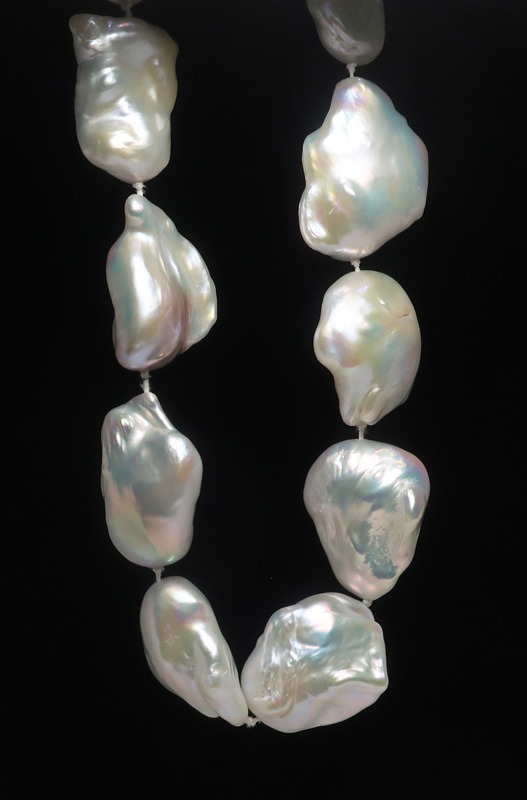
A major trend in the pearl industry today is keshi pearls. Keshi pearls are baroque (irregularly shaped) pearls that form as a by-product of the culturing process. When pearl farmers are harvesting conventional cultured pearls from saltwater oysters, sometimes the inserted bead is rejected, but a pearl still develops, or an extra pearl might accidentally form. There is strong demand for keshi pearls coupled with a limited supply, making them quite expensive.
It’s interesting to find a small, delicate necklace tucked away somewhere in the back of a jewellery box, made of a single row of tiny pearls that gradually increase in size. This necklace may have belonged to grandma, or even great grandma. Such delicate necklaces often look like they should be worn by a child, and they frequently were. These were commonly “add-a-pearl” necklaces. An “add-a-pearl” was often a family project, with grandma, an aunt, or parents visiting their local jeweller to buy a chain with a single pearl for each birthday and family celebration, gradually adding one pearl at a time until the necklace was complete. Interestingly, some of these necklaces were made from natural pearls, even up until the 1950s or later.
Many add-a-pearl necklaces were left unfinished, as family members forgot about them after 10 or 15 years. The result is a necklace with 20 or 30 pearls at the front, attached to a chain that holds the jewel, waiting possibly forever for the remaining pearls.
Add-a-pearl necklaces typically feature pearls around 2.0 or 3.0 mm at the ends, graduating to about 5 mm in the centre. Given their modest size, most of us might prefer larger pearls, but these lovely little necklaces are ideal jewellery for a small child, just as originally intended. They are perfect for the flower carrier or ring-bearer at a wedding. Even if the pearls are natural, they are small and generally modest in value, perhaps around a $1,000 if sold at auction.
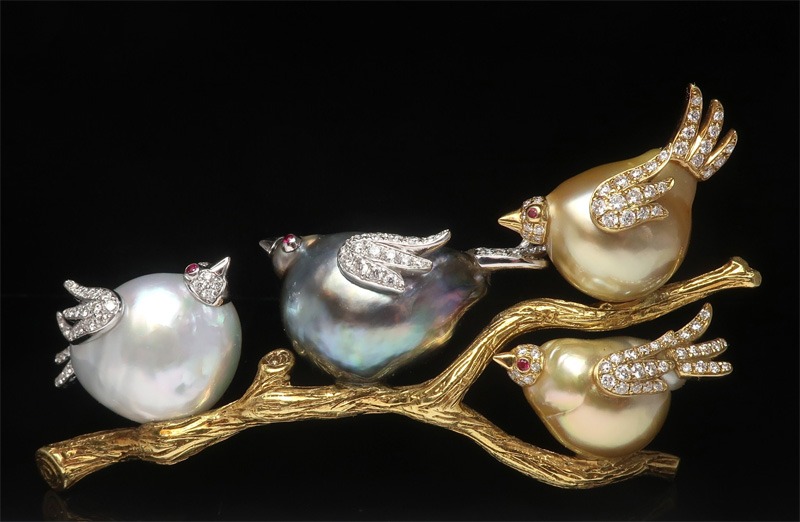
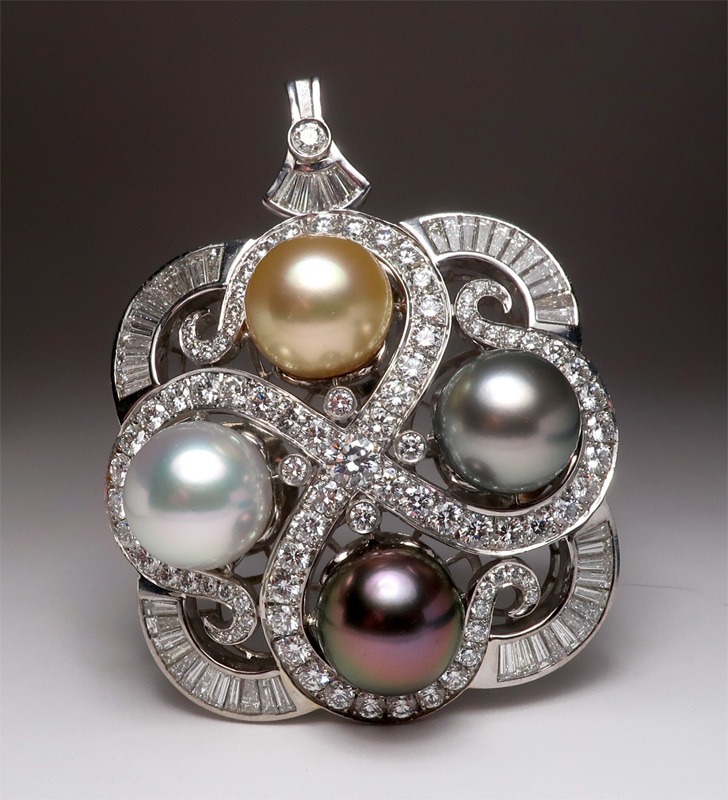
Pearls tend to be passed down through generations. When jewels are handed on, their value is more about family connections than monetary worth. A gift from an earlier generation is an unmatched treasure.
It’s important to encourage clients to use their pearls and to recommend re-stringing when a necklace is stretched or worn. Most pearl necklaces are knotted between the pearls, which prevents the pearls from rubbing against each other, and also means that if the necklace breaks, you won’t hear 30 or 40 pearls rolling down the aisle and dropping one by one into the orchestra pit. If a knotted pearl necklace breaks, maybe one pearl might roll away, but the rest will stay in place.
If a client comes in with their vintage pearls, take the opportunity to ask them to put them on, admire their beauty, and suggest some pearl accessories to finish the look. The story behind the pearls continues to grow from generation to generation. A new pair of pearl earrings simply adds another chapter to that story.
Sign up for our newsletter
Get all the latest news and features from Jewellery Business. Submit your email below to get our twice-monthly newsletter.
Products



Read the Latest Issue
